Choosing the best exterior patio doors for energy efficiency involves more than comparing glass styles or attractive frame colors. These doors connect your conditioned home to changing outdoor conditions. They can also become weak points for heat transfer, drafts, and unwanted moisture.
Building scientist Joseph Lstiburek famously says, “Windows are holes in the wall.” His blunt observation also applies to patio doors. Large glass areas demand careful design, accurate installation, and realistic performance expectations. Even an excellent door can perform poorly when the frame is uneven or the weatherstripping is compressed incorrectly.
This guide examines the features that matter most. We will compare low-emissivity glass, insulated frames, multiple glazing layers, thermal breaks, and air-leakage ratings. U-factor helps explain heat flow through the complete door assembly. Solar heat gain coefficient shows how much sunlight enters the room. Both numbers matter, but neither tells the entire story.
Installation matters greatly.
A door should open smoothly without forcing the rollers. Its seals should meet evenly around the frame. Small gaps near the sill can create noticeable cold spots during winter. In warmer climates, excessive solar gain may increase cooling demand near the glass.
ENERGY STAR and NFRC labels provide useful evidence, not magic answers. Climate, orientation, shading, and household habits still influence results. I have to admit that “most efficient” is not always the same as “best choice.” A highly rated door may disappoint if its operation, drainage, or installation quality is overlooked. The sections ahead will help identify exterior patio doors that balance measurable efficiency, daily comfort, durability, and practical value.
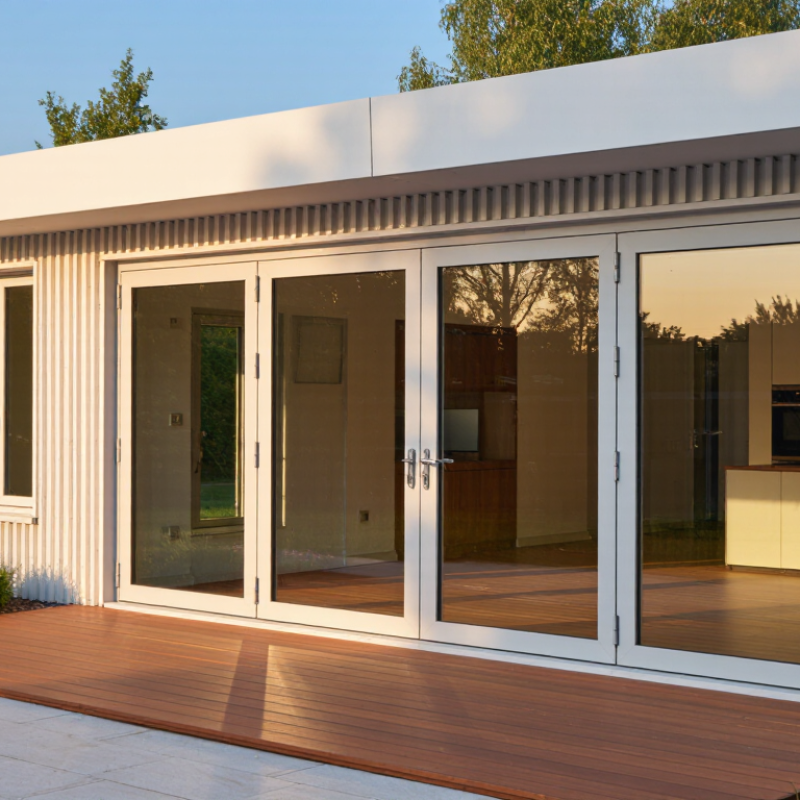
An energy-efficient exterior patio door begins with its glass, frame, and installation. Low-emissivity glass helps reflect indoor heat during winter. It also reduces unwanted solar gain during hot weather. Double glazing is useful, while triple glazing can improve insulation in colder climates. However, more glass layers do not guarantee better performance.
Check the door’s U-factor, air-leakage rating, and solar heat-gain coefficient. Lower U-factor values usually indicate stronger insulation. A tight weather seal prevents cold drafts around the moving panel. Multi-point locks can improve compression against the gasket. Thermally separated frames also reduce heat transfer through the door edge. Small gaps can defeat expensive glass. A perfect patio door does not exist.
Tips: Inspect the weatherstripping every season. Look for daylight around the frame. Close a paper strip in the door; it should resist pulling out. Choose a low solar-gain rating for strong afternoon sun. Use a higher rating when winter sunlight benefits the room. Ask for independently verified performance data, not vague efficiency claims. Professional installation matters because an unlevel threshold can cause leaks and air movement. Local climate, wall orientation, and room ventilation should guide the final choice. Triple glazing may be unnecessary in a mild region, and heavier doors can be harder to operate.
For energy-efficient patio doors, the material matters as much as the glass. Vinyl frames usually resist moisture and conduct less heat than metal. Fiberglass offers similar insulation, with stronger dimensional stability during seasonal temperature changes. Wood naturally insulates well, but it needs careful sealing around its exterior surface.
Aluminum frames are durable and slim, yet untreated metal transfers heat quickly. A thermal break separates the inner and outer frame sections, reducing that transfer. Look for low U-factor ratings, which indicate better insulation. Solar heat gain coefficient also matters. Lower values can help in hot climates, while moderate values may benefit colder rooms.
In real installations, the frame is only part of the story. I have seen a well-rated door perform poorly because foam gaps remained beneath the sill. Cold air gathered near the floor on winter mornings. Proper flashing, compression seals, and accurate shimming are essential. A slightly imperfect installation can erase expensive glass upgrades. That deserves more attention.
Sliding doors may also leak more air when rollers or weatherstripping wear down. Hinged doors often seal tightly, but their threshold must remain level. Check the manufacturer’s tested ratings, not vague claims such as “energy saving.” Climate, wall exposure, and daily use should guide the material choice. A reflective evaluation is useful: the most insulating frame may not be the best fit if maintenance is consistently neglected.
Choosing an exterior patio door for energy efficiency starts with its glass package. The glass often controls comfort more than the decorative frame. In cold climates, double or triple glazing reduces heat loss by creating insulating air spaces. Low-emissivity coatings reflect indoor warmth back into the room. Argon-filled spaces can improve insulation further.
Triple glazing performs well in severe winter conditions. It can also add weight and cost. In sunny rooms, solar control deserves equal attention. A low solar heat gain coefficient, or SHGC, limits unwanted summer heat. This helps rooms with south- or west-facing doors stay more comfortable. However, heavily tinted glass may make daylight feel dull. I once saw a bright living room become noticeably cooler, but the garden view looked muted. That trade-off is easy to overlook.
Visible transmittance shows how much natural light enters the room. Compare it with the U-factor and SHGC, rather than judging glass by appearance alone. Certified whole-door test data is more useful than center-glass performance by itself. Frames, edge spacers, and seals also affect results. Warm-edge spacers can reduce condensation along the glass perimeter. Installation matters too. Even excellent glazing may underperform around a poorly sealed threshold. My own preference is clear low-E glass with moderate solar control, but the best choice depends on orientation, climate, shading, and room use. No option is perfect.
Comparing typical glass options for insulation and solar control
How to read the chart: A lower U-factor generally indicates better insulation and reduced heat transfer. SHGC measures how much solar heat enters through the glass; lower values can help limit summer heat gain, while higher values may be beneficial in colder climates with useful winter sunlight.
Values shown are representative center-of-glass figures for common residential glazing configurations. Actual patio-door performance varies by frame, spacer, coatings, installation quality, orientation, and climate.
Choosing an energy-efficient patio door starts with more than glass size. Sliding doors save space, but their rolling tracks can challenge airtightness. Hinged doors usually compress seals more firmly, although poor alignment can reduce that advantage.
According to the U.S. Department of Energy, air leakage may represent 5% to 30% of household heating and cooling costs. That range makes seals worth serious attention.
Check the National Fenestration Rating Council label for U-factor, solar heat gain coefficient, and air-leakage performance. Lower U-factor generally means better insulation.
In sunny climates, a lower solar heat gain coefficient can reduce unwanted indoor heat.
Look for continuous weatherstripping, tight corner joints, and a multi-point latch.
Small gaps near the sill deserve inspection. They often admit cold air and wind-driven rain.
Frame material also changes performance. Thermally improved frames reduce conductive heat transfer, while insulated cores can limit cold interior surfaces.
Installation quality remains the weak link. The ENERGY STAR installation guidance emphasizes square, level, and plumb placement, followed by careful flashing and perimeter sealing.
A high-performing door can underperform when foam blocks drainage channels or sealant bridges moving joints. That mistake is easy to miss.
Homeowners should request product ratings, installation details, and photographs before approving the work.
I would still question any promise of zero drafts. Buildings move, seals age, and real conditions are less perfect than laboratory testing.
Choosing the best energy-efficient patio door starts with your climate, not its appearance. The U.S. Department of Energy reports that windows can represent 25%–30% of residential heating and cooling energy use. A poorly sealed patio door can add noticeable drafts near the sofa or dining table. Check the U-factor first. Lower values indicate better insulation. Then review the solar heat gain coefficient, or SHGC, especially for sunny rooms.
The National Fenestration Rating Council recommends comparing independently verified U-factor, SHGC, visible transmittance, and air-leakage ratings. ENERGY STAR reports that replacing single-pane clear glass with certified efficient windows can reduce household energy bills by about 7%–15%. Patio doors with double glazing, low-emissivity coatings, and insulated frames often provide a sensible balance. Triple glazing may perform better in cold regions, but its weight and cost can complicate installation. More glass is not always better.
Inspect the frame and threshold carefully. A small gap beneath the door can defeat expensive glass. Look for compression seals, a thermally improved frame, and a drainage path that keeps rain outside. Sliding doors need smooth rollers and firm weatherstripping. French-style doors require accurate alignment. Ask for the whole-unit air-leakage rating, not only the glass specification. Installation quality remains the uncertain part. Even a highly rated door can underperform when the opening is uneven or the flashing is incomplete. A lower U-factor alone does not guarantee comfort.