7 Tips for Buying a Sliding Shower Door
A Sliding Shower Door can make a compact bathroom feel more open, but the right choice depends on more than appearance. Before comparing finishes, measure the opening at the top, middle, and bottom. Walls are not always perfectly square. Note the tub or shower-base material, nearby fixtures, and available clearance for the panels. Small details matter.
This guide’s expert voice, Jordan Lee, is fictional; the quotation below is illustrative, not a verified statement from a real professional. “Measure the opening twice, then check how the door will move in your actual bathroom.” It captures a useful point: a sleek door is no help if a towel bar blocks it or water escapes at the threshold. The seven tips ahead cover measuring, glass thickness, frame style, track design, hardware, installation, and cleaning. Look closely at rollers and bottom seals; those parts take daily wear and can be easy to overlook in a showroom. Compare warranties and installation requirements, too. A low price may not include professional fitting. And yes, there are trade-offs: thicker glass can feel sturdy, but it adds weight and may affect installation needs. Use these checks to narrow your options, ask better questions, and choose a door that fits both the opening and your routine. It may still take a second look.
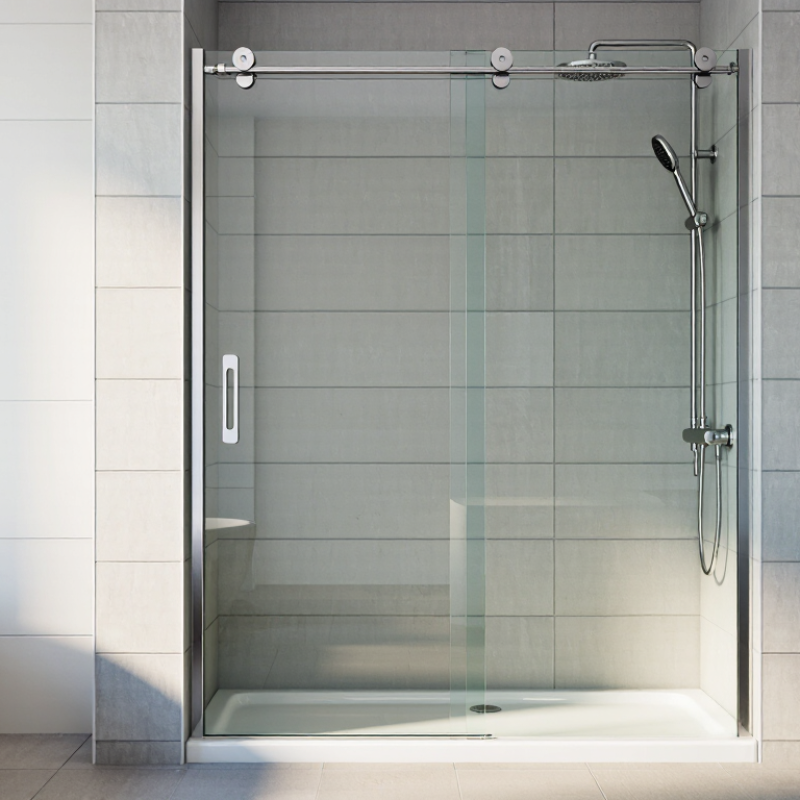
Measure the Shower Opening and Assess the Bathroom Layout
Before choosing a sliding shower door, measure the finished opening from tile to tile. Take width readings near the top, middle, and bottom; walls are not always perfectly parallel. Record the narrowest measurement, then check the door’s required adjustment range. Measure the height at both sides, too. A sloped curb or uneven tile can change the fit.
Tip: Use a rigid tape measure, and write down each number immediately. Check whether handles, towel bars, or nearby cabinets could block the panels. Slide an imaginary door through its full path, leaving room for hands to reach the handle. Small clearances matter.
Assess the whole bathroom, not just the shower opening. Note where the toilet, vanity, and entry door sit, then consider how people move between them. A sliding panel saves swing space, but its track and handle still need clearance. Look closely at the curb and wall surfaces where hardware may attach. If measurements differ, don’t assume the walls are square; I once trusted a single reading and had to recheck everything. Compare your notes with the door’s installation specifications before buying, and ask a qualified installer if the opening or surfaces seem unusual.
Compare Glass Safety, Thickness, and Protective Coatings
A sliding shower door faces daily knocks, steam, and repeated cleaning, so glass safety matters more than appearance alone. Choose safety-tempered glass and check the product documentation for its applicable safety standard. Tempered glass is designed to break into smaller pieces than ordinary glass, but it is not unbreakable. Look closely.
Thickness affects feel and weight. Many doors use glass around 6 to 10 millimeters thick, though suitable dimensions depend on the door system. A thicker panel may feel sturdier, yet it also places more load on rollers and supports. Match the glass to the hardware specifications rather than assuming thicker is always better. Check that the door glides smoothly and does not wobble when gently moved.
Protective coatings can help water bead and reduce mineral spotting, especially in hard-water areas. They do not prevent every mark, and harsh cleaners may damage some finishes. Ask whether the coating is applied to one or both sides, and follow its care instructions. A quick wipe after showering helps. It is easy to overvalue a coating; regular maintenance still matters, and honestly, that part is easy to forget.
Evaluate Tracks, Rollers, and Hardware Materials
A sliding shower door should glide smoothly, but the track often reveals its quality. Houzz’s 2024 U.S. Bathroom Trends Study reports that 84% of renovating homeowners upgraded their shower. That makes hardware worth careful attention. Run your finger along the track’s edges; sharp seams can collect residue and complicate cleaning. Look for a design with accessible drainage channels and few hidden corners. Small details matter.
Check that rollers move without scraping or wobbling. Ask whether they can be adjusted and replaced separately; a worn wheel should not force a full door replacement. Stainless steel and corrosion-resistant coated metals are practical choices in damp bathrooms, but grade and finish matter. Request the material specification, not just a “rust-resistant” claim. That wording alone proves little. Compare roller size and mounting style with the door’s weight and track design, using the manufacturer’s installation guidance.
Inspect the handles, screws, and brackets too. Mixed metals can age differently, especially where water sits. Open and close the door several times in the showroom, listening for grinding and watching for uneven movement. It is easy to focus on glass clarity and overlook the hardware. I would still check how the track comes apart for cleaning; buyers often miss that until soap film builds up.
7 Tips for Buying a Sliding Shower Door: Compare Glass Thickness
Common nominal glass thickness options are shown in millimeters. Values are converted from 1/4, 5/16, and 3/8 inch (1 inch = 25.4 mm).
Thicker glass is heavier, so check that the track, rollers, and hardware are rated for the selected door. Also inspect roller movement and choose corrosion-resistant hardware for a damp bathroom.
Check Installation Requirements, Maintenance, and Warranty
Tip: Check the opening before choosing a sliding shower door. Measure the width at the top, middle, and bottom; walls are not always perfectly straight. Also confirm the required wall clearance, curb width, and mounting surface. Some doors need solid backing behind the tile. Measure twice. A small mismatch can complicate installation, even when the door looks right online.
Tip: Ask how the door should be cleaned and maintained. Soap film can build up along the bottom track, where it is easy to overlook. Rinse and dry the track regularly, and use cleaners approved for the glass and hardware. Avoid assuming every finish tolerates the same products. That detail is easy to miss. Check whether rollers or seals need periodic adjustment, too; maintenance instructions can differ by design.
Tip: Read the warranty before purchasing, not after a problem appears. Check what it covers, how long coverage lasts, and whether installation must follow specific instructions. Some warranties distinguish manufacturing defects from normal wear, glass damage, or issues caused by improper fitting. Keep the receipt and installation records. Warranty language can be dull, admittedly, but unclear coverage is worth asking about before delivery.