10 Essential Tips for Choosing the Right Food Warmer?
Choosing the right Food warmer can be a daunting task. With so many options available, making an informed decision is crucial. Jessica Martin, a recognized expert in food service equipment, emphasizes, "A good food warmer can transform meal presentation and safety." Her insights underline the importance of selecting the right equipment to maintain food quality and temperature.
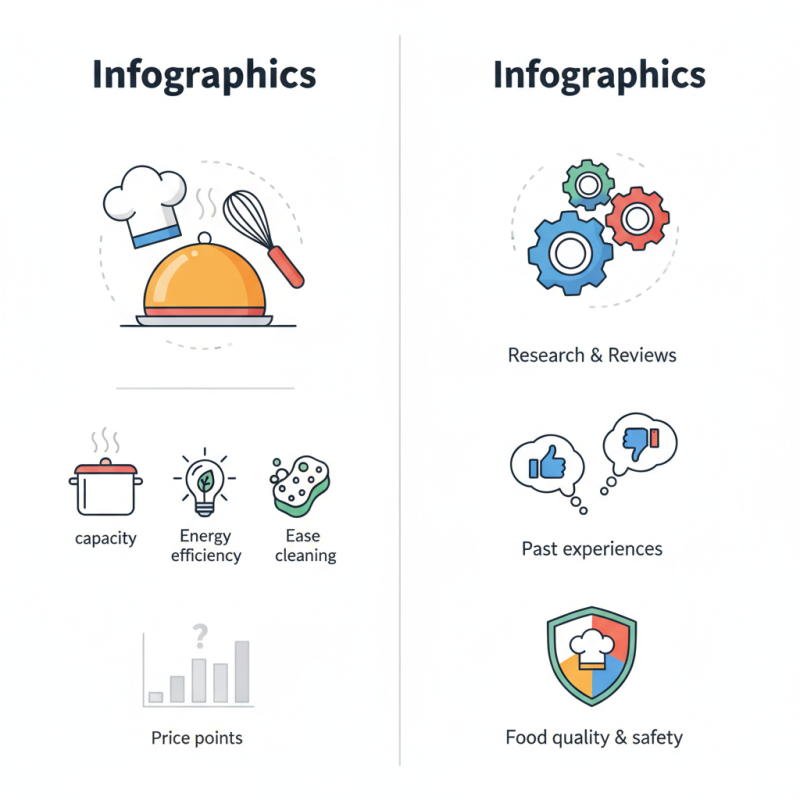
Food warmers come in various sizes and designs, catering to different needs. Understanding the specific requirements for your business or personal use is key. Consider factors such as capacity, energy efficiency, and ease of cleaning. Many users overlook these aspects, leading to poor choices. Without careful consideration, a food warmer may not meet your expectations.
Additionally, price points vary widely across brands. Higher prices do not always guarantee better quality. Research and reviews play a vital role in ensuring reliability. Reflect on your experiences with previous food warmer purchases. What worked? What didn’t? These reflections can guide you to a more successful choice this time. Remember, making an informed decision greatly impacts the quality of food service you provide.
Understanding Different Types of Food Warmers Available on the Market
Choosing the right food warmer requires understanding the various types available on the market. There are several categories, including electric, water, and dry heat warmers. Each type has its own specific features, benefits, and limitations. A recent industry report noted that 37% of commercial kitchens prefer electric warmers due to their energy efficiency and ease of use. They heat food evenly and maintain temperature for extended periods.
Water warmers provide a moist heat, making them ideal for dishes such as soups and sauces. According to research, these models maintain humidity levels, preventing food from drying out. On the downside, they require regular maintenance to ensure water levels remain adequate. Some users find this process tedious.
Dry heat warmers, while effective for baked goods, can lead to crust formation or drying out if not monitored closely. Price and capacity are also crucial factors to consider. The average cost of a commercial food warmer ranges from $150 to $1,500, depending on size and features. A survey found that 52% of chefs felt overwhelmed by the options available. Many admitted to making impulse purchases without understanding their specific needs. Taking the time to evaluate the different types of warmers can help select the best fit for any kitchen operation.
Evaluating Size and Capacity for Your Specific Food Serving Needs
Choosing the right food warmer involves careful consideration of size and capacity. Businesses must evaluate their specific food serving needs to optimize efficiency. According to the National Restaurant Association, 67% of restaurants report increased customer satisfaction with well-maintained food temperatures. This underscores the importance of adequate capacity.
When selecting a warmer, think about the volume of food you will serve. A warmer with too small a capacity may lead to overloading. This can cause uneven heating, affecting food quality. Conversely, a larger unit could consume more energy than necessary. Consider how many guests you typically serve at peak times. A food warmer that accommodates this demand will enhance service speed.
Many professionals recommend calculating the capacity required by assessing the typical portion sizes. For instance, if servings average 10 ounces, and you expect to serve 100 guests, a warmer with at least 60 quarts is beneficial. Reflect on your operation’s flow as well; if your kitchen is compact, a smaller unit may be ideal despite potential limitations in capacity. Balancing size and capacity is essential for practical function.
Assessing Energy Efficiency and Power Consumption of Food Warmers
When selecting a food warmer, energy efficiency is crucial. Not all models are created equal. Some consume excessive energy, leading to higher bills. A food warmer with a high energy efficiency rating can save money over time. Look for units that mention their power consumption in watts. This simple step helps you compare options clearly.
Consider the purpose of your food warmer. If you need it for home use, a smaller model may suffice. For commercial settings, larger units might be necessary. Understand the power consumption of the warmer you choose, as it directly impacts your operating costs. Higher-powered units may heat food more quickly, but they can also drive up your electricity bill significantly.
Do not overlook the importance of insulation. Well-insulated warmers maintain heat efficiently. This means less energy is wasted. Take time to assess user reviews and expert opinions. Real experiences help gauge reliability and performance. Not every food warmer lives up to its claims. Prioritize units that have a solid track record.
Comparing Heating Methods: Electric, Gas, and Alternative Options
When considering a food warmer, understanding different heating methods is crucial. Electric food warmers are highly popular due to their convenience. They provide consistent heat and are easy to use. Just plug them in, set the temperature, and you're ready to go. However, they may not be the best choice for large gatherings. The capacity can be a limitation.
Gas food warmers offer a different experience. They heat up quickly and are often considered more efficient. They can maintain high temperatures, making them suitable for busy kitchens. However, the installation process can be complex. Access to gas lines is necessary, which might not be available in all locations.
Alternative options like induction warmers are gaining traction. They are energy-efficient and provide precise temperature control. Their portability is a plus, but they can require compatible cookware. Additionally, some users might find the cost higher. Each method has its pros and cons, and your choice may depend on specific needs and circumstances. Maybe it’s time for a deeper evaluation of what you truly need.
Comparison of Food Warmer Heating Methods
Exploring Features and Accessories that Enhance Food Warmer Functionality
Choosing the right food warmer goes beyond just functionality. Enhancements through features and accessories can significantly improve your experience. A versatile food warmer should offer adjustable temperature settings. This allows you to keep food at the ideal warmth, ensuring each dish is served perfectly.
Consider additional accessories like food pans and covers. These add durability and efficiency. Pans made from quality materials help distribute heat evenly. Covers can retain moisture, preventing food from drying out. Keep an eye out for compatibility with your existing kitchen tools. This can save time and effort in food preparation.
It's important to think about space. Larger units may not fit well in smaller kitchens. Compact models might limit your warming capabilities. Reflect on your needs and environment before making a decision. Balancing size, functionality, and accessories can be tricky but is crucial for optimal use.
10 Essential Tips for Choosing the Right Food Warmer
| Feature/Dimension | Description | Importance |
| Size and Capacity | Consider the amount of food you need to warm. | High |
| Temperature Control | Ability to adjust temperature for different food types. | High |
| Material | Durable materials that withstand heat. | Medium |
| Portability | Ease of transportation for catering or events. | Medium |
| Energy Efficiency | Lower energy consumption for cost savings. | High |
| Accessories | Additional racks or pans that enhance functionality. | Medium |
| Ease of Cleaning | Simplified cleaning mechanisms for maintenance. | High |
| Indicator Lights | Visual signals to indicate operational status. | Medium |
| Warranty and Support | Manufacturer warranty and customer support availability. | High |
| Safety Features | Overheat protection and automatic shut-off mechanisms. | High |