How to Choose the Right Forklift Collision Detection System?
In warehouses and manufacturing facilities, safety is paramount. The implementation of a Forklift Collision Detection System can significantly reduce accidents. According to the Bureau of Labor Statistics, forklift accidents contribute to nearly 100 deaths annually in the U.S. alone. These collisions often result in serious injuries and impede productivity.
Many companies overlook the importance of a reliable detection system. They assume that training employees is enough. However, the National Institute for Occupational Safety and Health highlights that safety technology can enhance worker protection. A well-chosen Forklift Collision Detection System identifies potential hazards, preventing accidents before they occur.
Not all systems are created equal. Some may provide limited detection ranges or be affected by environmental factors. Reflecting on past incidents can reveal gaps in safety protocols. Investing in the right technology is crucial for long-term success and employee well-being.
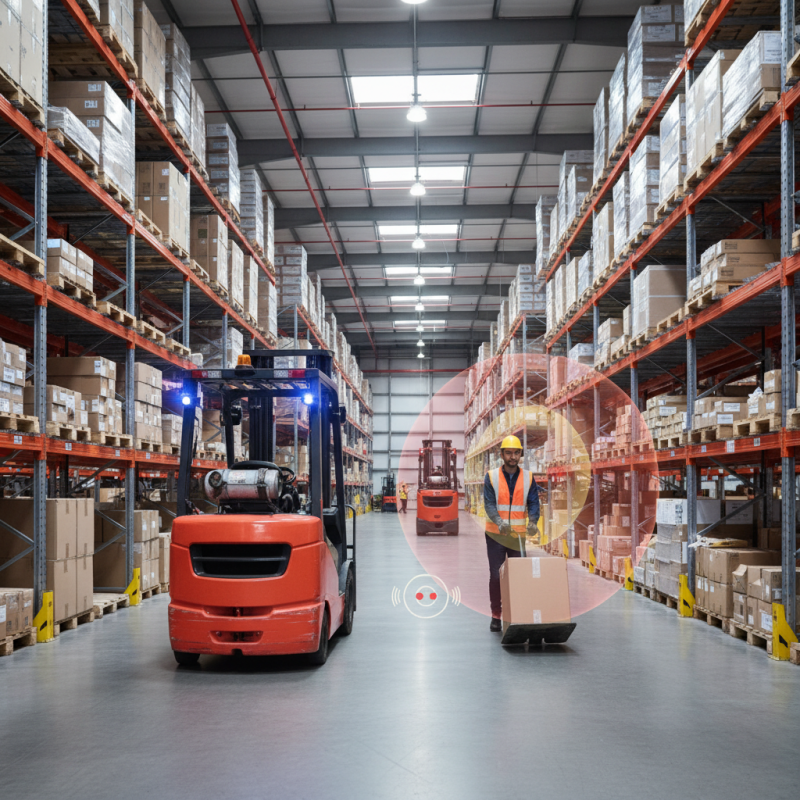
Understanding Different Types of Forklift Collision Detection Systems
When selecting a forklift collision detection system, it’s crucial to understand the various types available. One popular option is the laser-based system. These systems use laser beams to detect obstacles. They offer high precision and can alert operators immediately. However, they might not function well in bright light. Users should test them in different lighting situations.
Another type is the ultrasonic detection system. This system sends sound waves to sense nearby objects. It is often more cost-effective than laser systems. Yet, ultrasonic systems can struggle with soft materials or certain environmental conditions. This limitation may lead to missed detections.
Magnetic systems are also an option. They rely on magnetic fields to identify nearby hazards. While they can work in various environments, they may not provide the same accuracy as other options. It’s important to evaluate the specific needs of your warehouse. Each system has its strengths and weaknesses. Finding the right fit requires careful consideration and testing. Be ready to reflect on which issues surface during operation.
Key Features to Look for in Collision Detection Technology
When selecting a forklift collision detection system, it's crucial to focus on key features. Technology should enhance safety and minimize accidents. Statistics show that nearly 20% of workplace injuries are related to forklift operations. These incidents can result in significant costs and disruptions.
Look for systems that offer real-time alerts. Immediate feedback can prevent accidents before they happen. Motion detection capabilities are essential. These allow the system to track the forklift’s movement and predict potential collisions. Many top solutions claim to reduce accidents by up to 30%.
Tip: Ensure the system integrates smoothly with existing warehouse infrastructure. Compatibility can save time and resources.
Another important feature is adaptability. The best systems learn from their environment. They adjust to changes in aisle width or pallet positioning. This adaptability keeps the technology relevant and effective in dynamic settings.
Tip: Regularly review and update your collision detection technology. As operations evolve, new challenges will emerge.
Consider user-friendliness as well. A complex interface can lead to confusion and errors. Systems should be intuitive, enabling easy training for operators. An effective system doesn’t just protect assets; it safeguards the workforce.
Industry Standards and Compliance for Forklift Safety Systems
When selecting a forklift collision detection system, understanding industry standards is crucial. Safety standards are designed to minimize accidents. Organizations like OSHA provide guidelines that outline requirements for forklift operations. Compliance with these standards ensures a safer work environment.
Not all detection systems are created equal. Some may meet basic standards but lack advanced features. It's essential to evaluate how well a system aligns with specific safety regulations. A system’s effectiveness hinges on its technology. Consider options like proximity sensors and alert systems. These tools help prevent accidents by providing real-time feedback.
Choosing the right system can be challenging. It’s not just about meeting minimum requirements. Companies must think beyond compliance. User feedback and incident reports can reveal system limitations. Identifying gaps can lead to improved safety measures. Engaging with employees about their experiences is vital. This interaction offers insights that enhance safety performance.
Forklift Collision Detection System Adoption by Industry
This chart illustrates the adoption rates of various forklift collision detection systems across different industries. Understanding these trends helps companies choose the right system that meets compliance and safety standards.
Cost-Benefit Analysis of Implementing Collision Detection Systems
When considering a forklift collision detection system, the cost-benefit analysis is essential. Many factors come into play when evaluating expenses. Initial setup costs can be high, but often, they lead to long-term savings. Imagine the potential costs associated with accidents or injuries. These are often far greater than the investment in safety technology.
Training employees on using these systems is another expense. Yet, a properly trained staff can significantly reduce risks. It’s not just about buying technology; it’s about integrating it into daily operations. Some companies underestimate this need. Without proper training, the system’s effectiveness could diminish. This presents a challenge worth reflecting on.
Maintenance of the system also requires budget allocation. Regular updates ensure that technology remains effective. However, neglecting this could lead to failures. In some cases, businesses might overlook these costs and thus compromise safety. Evaluating the total cost versus the benefits gained through improved safety is crucial for informed decision-making. The road to safer operations is often lined with careful planning and reflection.
How to Choose the Right Forklift Collision Detection System? - Cost-Benefit Analysis of Implementing Collision Detection Systems
| System Type | Installation Cost ($) | Annual Maintenance Cost ($) | Employee Training Cost ($) | Accident Reduction Rate (%) | ROI (% Over 5 Years) |
| Laser-based System | 5,000 | 500 | 1,000 | 70 | 150 |
| Camera-based System | 4,000 | 400 | 800 | 60 | 120 |
| Infrared System | 3,500 | 300 | 600 | 50 | 100 |
| Ultrasonic System | 2,500 | 200 | 500 | 40 | 80 |
| RFID-Based System | 6,000 | 600 | 1,200 | 80 | 170 |
Real-World Case Studies of Effective Collision Management Solutions
In a busy warehouse, the need for effective collision management becomes evident. A prominent case study highlights the installation of a collision detection system that uses sensors and alarms. When a forklift approaches a pedestrian, an alert activates. This simple approach significantly reduced accidents. However, early adoption faced some challenges. Not all employees were attentive, and some alarms went unnoticed.
Another example involves a facility using advanced tracking software. This system logs movements and analyzes patterns to optimize routes. The data revealed frequent blind spots, sparking discussions on route changes. Even with improvements, employee engagement varied. Some workers felt the software was too intrusive. Finding the right balance remains a hurdle.
Real-world applications show that technology is only part of the solution. Training staff on the importance of collision awareness is critical. Employees must remain vigilant and responsive to alerts. Incorporating feedback into ongoing training programs can enhance the effectiveness of these systems. Balancing technology with human behavior leads to better safety outcomes.