How to Choose the Best Silent Diesel Generator for Your Needs?
Choosing the right silent diesel generator can be challenging. Expert John Smith states, "Selecting the best generator requires understanding your needs." Silent diesel generators offer power with minimal noise. They are ideal for various environments.
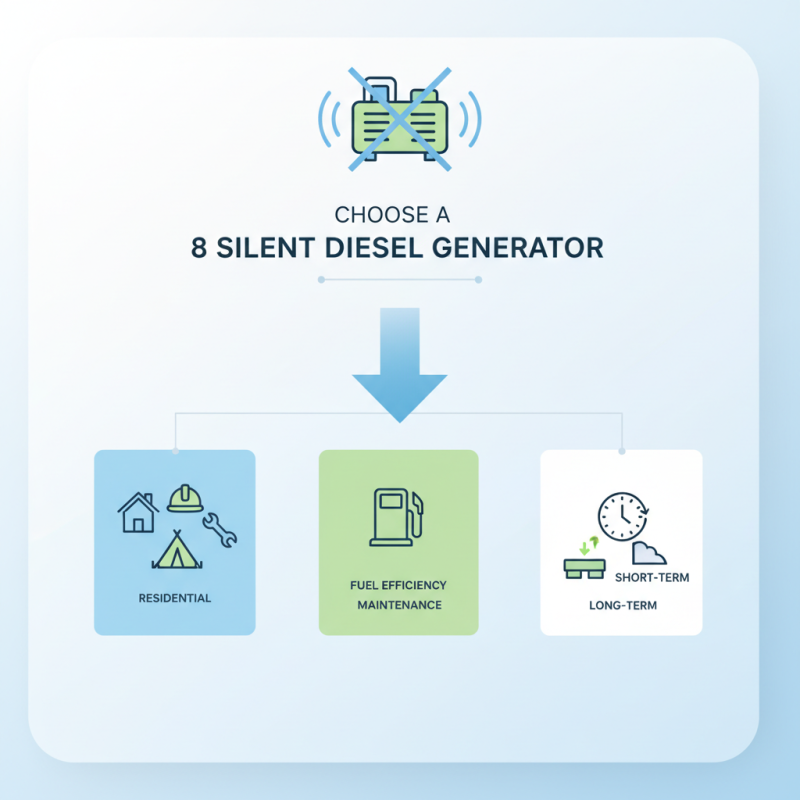
When considering a silent diesel generator, start by assessing your power requirements. Think about where you will use it. Will it be for residential purposes, construction sites, or outdoor events? Each situation calls for different power output and portability.
A key detail to remember is fuel efficiency. Some generators consume more fuel than others. This can increase operational costs over time. Also, consider maintenance needs. Regular upkeep is essential for reliability. Ultimately, it's important to reflect on both short-term and long-term needs.
Understanding Your Power Needs for a Silent Diesel Generator
Understanding your power needs is crucial when selecting a silent diesel generator. The first step is assessing the total wattage required for your appliances and equipment. According to a report from the U.S. Department of Energy, households typically need between 5,000 to 7,500 watts during outages. This range will vary significantly based on what you plan to power. Identifying essential devices helps prioritize your requirements.
Noise level is another important factor. Diesel generators can range from 50 to 75 decibels. A quieter model ensures that power is supplied without disrupting your living environment. Studies show that prolonged exposure to noise levels above 70 decibels can lead to stress and health issues. Choosing a generator under 60 decibels can be a significant benefit in urban settings.
Also, consider fuel efficiency and runtime. Many generators run for 8 to 12 hours on a full tank. But be wary of those that offer longer runtimes. Sometimes, these claims are based on ideal conditions that don’t reflect real-world usage. It's essential to realistically evaluate how much fuel you'll need over time. If your generator doesn’t meet these needs, you'll find yourself in a difficult situation during extended outages.
How to Choose the Best Silent Diesel Generator for Your Needs?
| Power Output (kW) | Fuel Tank Capacity (liters) | Noise Level (dB) | Run Time (hours) | Weight (kg) |
| 5 | 15 | 60 | 12 | 90 |
| 10 | 20 | 62 | 10 | 120 |
| 15 | 25 | 65 | 8 | 150 |
| 20 | 30 | 68 | 6 | 180 |
| 30 | 40 | 70 | 5 | 250 |
Evaluating Generator Noise Levels: Specifications to Consider
When evaluating generator noise levels, certain specifications play a crucial role. The decibel rating is the primary indicator of noise output. Generally, a generator rated at 60 dB is considered quiet and may be suitable for residential use. Keep in mind that perception of sound is subjective. A generator at 60 dB can still feel loud in a small space but may blend into background noise outdoors.
Another factor to consider is the generator's enclosure design. Models with better insulation and sound-dampening materials tend to be quieter. Look for those with advanced technologies that minimize vibration. Vibration can increase noise levels significantly, especially if the generator is placed on a hard surface. It is wise to pay attention to how and where the generator will be used. Outdoor gatherings might require less noise sensitivity than a home environment.
Do not overlook the importance of maintenance. Regular upkeep can significantly impact a generator's performance and noise output. A well-maintained engine runs smoother and quieter. In contrast, an aging or poorly maintained generator may produce disruptive sounds. Small details can make a big difference in the overall user experience. Consider these aspects carefully to choose a generator that aligns with your needs.
Key Features to Look for in a Silent Diesel Generator
When choosing a silent diesel generator, consider the noise level carefully. Look for models with a low decibel rating. A quiet generator can significantly enhance your experience. It’s ideal for residential areas or events where noise might disturb others.
Power output is another crucial feature. Make sure the generator meets your energy needs. Consider your appliances and equipment. Calculate the total wattage required. Choosing a generator that is too small can lead to problems. Generators that are too large can waste fuel and may not operate efficiently.
Tips: Always check the fuel efficiency. A generator that consumes less fuel saves you money over time. Also, consider the build quality. Look for durable materials that can withstand various environments. Lastly, read user reviews to learn from others' experiences. Their insights can help avoid pitfalls.
Comparing Different Brands and Models of Silent Diesel Generators
When choosing a silent diesel generator, you’ll find many brands and models to compare. Each brand offers unique features and performance characteristics. Some generators might promise quieter operation, but real-world results can be different. It’s essential to read user reviews and ratings to get an accurate picture.
Another consideration is the power output. While some models claim high output, they may struggle under heavy loads. Knowing your power needs can help narrow your options. Also, look at the fuel efficiency of different models. A more efficient generator will save you money in the long run.
Portability is important too. Some models are bulky, which might limit their usability. Others come with wheels for easy transport. Think about where you’ll use the generator. A compact model may be ideal for outdoor events, but will it provide enough power? Reflecting on these aspects will guide your choice effectively.
Maintenance Tips for Prolonging the Life of Your Diesel Generator
Maintaining a diesel generator is crucial for its longevity and performance. According to a study by the Diesel Technology Forum, regular maintenance can extend the lifespan of generators by up to 40%. Simple tasks like changing the oil and filters on schedule prevent engine wear. Keeping the fuel system clean is also essential. Dirt and debris can cause poor combustion and lower efficiency.
Every six months, inspect the battery and connections. A weak battery can lead to starting problems. Cleaning the terminals can improve conductivity. Furthermore, check the radiator for blockages. Overheating is a common issue in diesel generators. If not addressed, it can cause severe damage.
Operators need to monitor usage closely. Overloading can strain the generator and reduce its lifespan. It's advisable to operate within the manufacturer's recommended limits. Pay attention to any unusual noises or vibrations, as these can signal underlying issues. Keeping a maintenance log helps identify patterns, but many overlook this detail. Regular checks and a proactive approach are key to ensuring reliability and efficiency.
Monthly Maintenance Checklist for Diesel Generators