
China’s AG cover lens industry is entering 2026 with stronger demand from smartphones, vehicle displays, industrial panels, and smart home devices. An AG cover lens reduces reflected glare through a controlled surface texture. It should also preserve image clarity, touch response, and visual comfort.
This guide examines ten leading Chinese manufacturers through practical and technical criteria. These include optical transmittance, haze consistency, surface hardness, fingerprint resistance, coating durability, and production capacity. Factory experience matters. So does process control.
A reliable manufacturer should provide clear technical data, traceable samples, and stable mass production. We also consider cleanroom conditions, glass processing equipment, quality inspection systems, and customer support. Certifications and documented testing strengthen confidence, but they cannot replace independent evaluation.
Real performance appears in small details. A display should remain readable beside a bright window. A vehicle screen should resist repeated wiping. An industrial panel should survive dust, gloves, and long operating hours. These situations reveal weaknesses that a laboratory sheet may hide.
The ranking is not absolute. Application requirements differ. A supplier suited to smartphones may not fit automotive displays. Public information can also change during 2026. Therefore, buyers should verify current certifications, sample results, lead times, and warranty terms before making decisions.
This overview offers a practical starting point. It is informed by manufacturing considerations, not advertising claims. Some judgments remain open to review. That is necessary. Technology changes quickly, and the best AG cover lens partner depends on real project conditions.
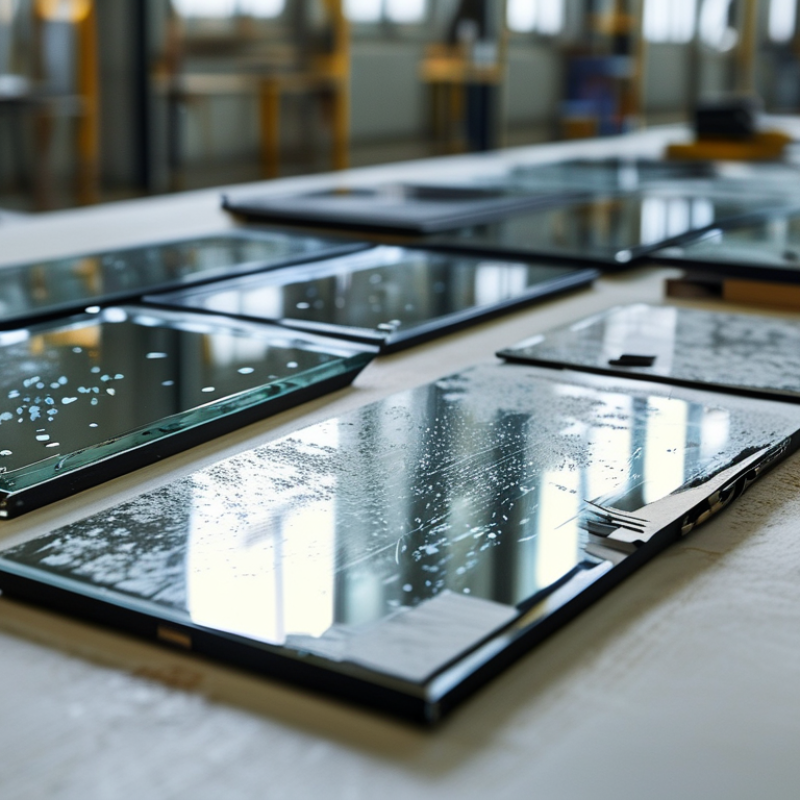
Anti-glare (AG) cover lenses reduce reflected light through controlled surface scattering. This improves readability under office lamps, sunlight, and vehicle interiors. The surface is not simply “rough glass.” It uses microscopic texture and carefully tuned coatings. Poor control can lower sharpness, create haze, or weaken touch sensitivity.
Demand is growing with brighter OLED panels and larger mobile screens. IDC reported approximately 1.23 billion smartphones shipped worldwide in 2024, creating a vast replacement market for durable display components. Counterpoint Research’s Global Smartphone Display Panel Market Tracker also reported OLED panels exceeding half of smartphone display shipments in several 2024 quarters. Brighter panels need stronger reflection management. They also expose coating defects more clearly.
Chinese manufacturers in the 2026 top-ten field are increasingly evaluated through haze, gloss, pencil hardness, chemical resistance, and optical transmittance. ASTM D1003 remains a common reference for haze testing, while ISO 8256-related practices support impact evaluation for protective materials. In practical testing, a lens may look excellent in a showroom but show fingerprints quickly during daily use. That gap matters. AG texture can also scatter fine text, especially on high-pixel-density screens. Manufacturers must balance low reflectance with clean image detail, stable touch performance, and edge strength. No coating remains perfect. Design teams still need realistic lighting tests, repeated cleaning cycles, and long-term outdoor exposure before approving production.
Ranking China’s top AG cover lens manufacturers in 2026 requires more than factory size. Evaluation starts with measurable optical performance. Reviewers should check haze, gloss, transmittance, surface reflectance, and visual distortion. Samples need testing under bright office lights and direct sunlight. Small differences become visible around icons, cameras, and black borders. Trial data matters. Laboratory results can miss edge flare or uneven surface texture.
A serious ranking also examines materials and process control. Reviewers should verify glass composition, coating uniformity, ink adhesion, and dimensional tolerance. Useful evidence includes pencil-hardness tests, steel-wool abrasion, sweat exposure, and chemical wiping. Production records should connect each batch to operators, equipment, and inspection results. Traceability builds confidence. Capacity claims require proof through delivery records and peak-volume planning. An attractive sample means little if mass production shifts color or curvature.
Reliability includes communication, engineering support, corrective action, and realistic lead times. Independent certifications can strengthen credibility, but certificates should match the actual facility and product. Customer references, repeat-order rates, and warranty handling reveal practical experience. Price deserves attention, not control. A low quote may hide coating losses, rework, or unstable inspection standards. Ranking weights should favor consistent performance and documented improvement. No manufacturer is flawless. A transparent supplier reports failures and adjusts the process. That honesty should influence the final ranking.
China’s Top 10 AG Cover Lens Manufacturers in 2026 reflect a market shaped by mobile devices, vehicle displays, and smart terminals.
IDC reported approximately 285.8 million smartphone shipments in China during 2024, creating steady demand for durable, low-reflection cover lenses. Fortune Business Insights valued the global cover glass market at about US$7.45 billion in 2023 and projected continued growth through 2032. These figures support stronger competition among Chinese suppliers.
The leading ten should be assessed through measurable production and quality indicators, not online visibility alone. Useful benchmarks include surface haze, gloss level, light transmittance, pencil hardness, coating uniformity, and salt-spray resistance.
A reliable supplier should also show cleanroom control, automated inspection, stable curved-glass forming, and traceable batch records. Small details matter. Fingerprints should clear quickly. Reflections should remain controlled under office lighting and direct sunlight.
Industry buyers also need evidence from independent testing laboratories, not only factory samples. Regional supply-chain studies from Omdia indicate that display and device production remains concentrated in Asia, giving Chinese manufacturers logistical advantages.
Still, ranking the top ten is imperfect. Public data often mixes cover glass, touch modules, and complete display assemblies. Buyers should verify actual AG capacity, yield rates, delivery history, and after-sales response before accepting any 2026 ranking.
China’s top 10 AG cover lens manufacturers in 2026 show different strengths across glass processing, coating, and device integration. Several operate automated cutting, CNC shaping, polishing, and chemical strengthening lines. Their products include smartphone cover glass, tablet panels, automotive displays, industrial touchscreens, and smart-home interfaces. Some offer 2D glass, while others support curved, hole-punched, or custom-shaped designs.
Their capabilities differ in practical ways. One manufacturer may focus on ultra-fine matte textures for premium handheld devices. Another may produce large panels with controlled haze for vehicle dashboards. Others specialize in optical bonding, black ink printing, edge treatment, or rapid prototype sampling. Reliable suppliers usually provide gloss, haze, surface hardness, abrasion, and fingerprint-resistance data. Factory audits still matter. Paper specifications are not enough.
Market focus also separates these manufacturers. Some mainly serve domestic consumer electronics assembly, while others target overseas display integrators and automotive suppliers. Industrial-focused producers often prioritize stable delivery, long service life, and customized dimensions. Consumer-focused factories may emphasize appearance, thinness, and high-volume pricing. A few combine several markets, though this can weaken specialization. Not every supplier maintains identical consistency across batches. Small differences in surface texture can change touch feel and image clarity. Careful sampling remains essential before mass production.
01 Comparing China’s top AG cover lens manufacturers requires more than checking a product catalog. Start with the glass type, surface hardness, haze, transmittance, and glare reduction data. Ask how each value was tested. Different laboratories may use different equipment, making direct comparisons unreliable. A supplier should provide clear test conditions, sample records, and traceable quality reports.
02 Request production samples before approving a large order. Inspect the lens under office lights, sunlight, and a dark screen. Look for uneven haze, rainbow effects, pinholes, edge chips, and fingerprints after repeated handling. Test the printed border, sensor area, and adhesive surface together. Some samples look excellent alone but perform poorly after assembly. That was an easy detail to overlook.
03 Manufacturing experience also matters. Review coating consistency across batches, inspection procedures, tooling control, and response time when defects appear. Ask about pilot runs, packaging protection, lead times, and capacity during peak seasons. A reliable manufacturer explains limits instead of promising everything. However, factory claims still need verification through independent testing and customer references. Price should remain important, but a cheaper lens may create higher rework costs. No comparison method is perfect. Real device testing can expose weaknesses that laboratory data misses.