China Best Bow Windows How to Choose the Right Supplier?

China Best Bow Windows How to Choose the Right Supplier?

Bow windows add depth, daylight, and a broad view, but their curved assembly can make supplier choice less straightforward. Frame strength, insulated glass, flashing details, and consistent joinery all matter. A sample corner joint can reveal more than a polished catalogue image.

The U.S. Department of Energy’s Energy Saver guidance estimates that windows account for 25–30% of residential heating and cooling energy use. That figure makes performance worth checking, not merely appearance. Building-science expert Joe Lstiburek is often credited with the blunt reminder, “Windows are holes in the wall.” For bow windows, the point is practical: weak seals or poor installation can undermine an otherwise attractive unit. Ask suppliers for independently verifiable test results, glass specifications, air-leakage data, and clear installation guidance. NFRC labels can help compare rated U-factor and solar heat gain coefficient; do not rely on vague claims such as “energy efficient.”

When assessing a China-based supplier, review factory quality controls, production capacity, packaging methods, and experience exporting comparable curved units. Request drawings, finish samples, and references for completed projects. Details matter. A small mismatch in frame dimensions may complicate installation and increase costs. A low quote can still be useful, but only when its specifications match competing offers. I would not treat any single certificate or factory video as proof of dependable performance; both deserve careful verification. This guide explains how to compare suppliers with evidence, ask better questions, and choose bow windows suited to the project rather than the sales pitch.
China Best Bow Windows How to Choose the Right Supplier?

Identify Bow Window Types, Panel Counts, Projection, and Structural Loads

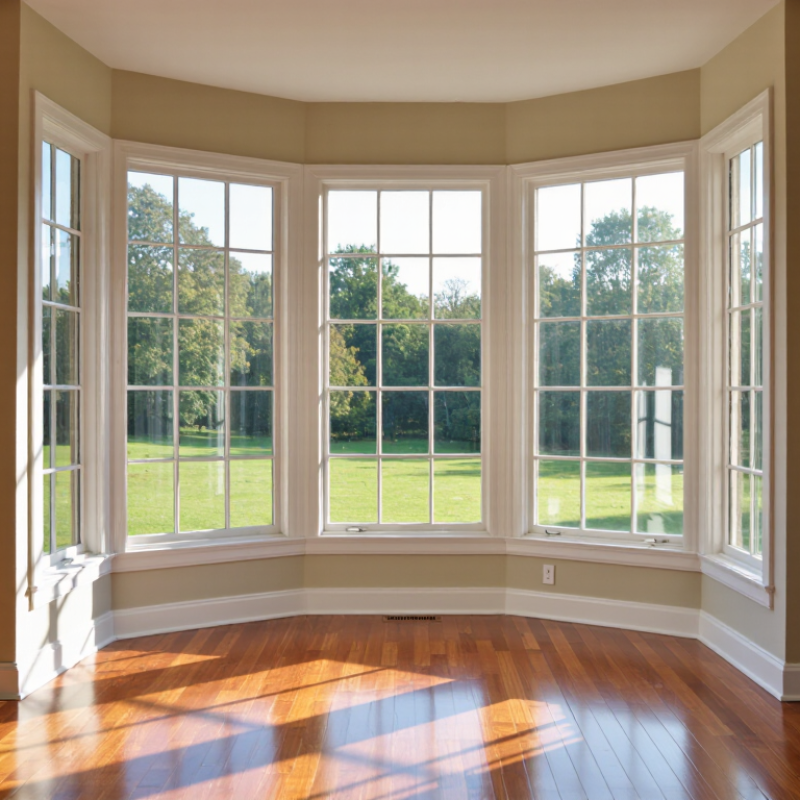
Choosing a bow window supplier in China starts with the window type. Bow designs usually use four or more joined panels to create a gentle curve. Each panel may be fixed, casement, or another opening style. Panel count affects sightlines, ventilation, hardware, and the number of joints that need sealing. A layout can look elegant on a drawing, yet feel crowded once furniture is in place.

Projection is the distance the window extends beyond the exterior wall. Confirm the proposed projection against room clearance, exterior trim, and any required support. Ask suppliers for dimensioned drawings, frame and glass specifications, anchoring details, and structural data for wind and other project loads. Snow loads may matter in some locations. Also clarify who verifies the opening and installation conditions; estimates cannot replace a site check. This is easy to overlook.

Tips: Compare suppliers using the same panel layout and projection. Request drawings showing overall width, height, and projection. Check how the supplier accounts for frame weight, glass weight, and anchoring. If load assumptions are unclear, ask for written clarification before approving production.

Set Thermal Targets Using NFRC U-Factor and SHGC Ratings

China Best Bow Windows: How to Choose the Right Supplier?
Set Thermal Targets Using NFRC U-Factor and SHGC Ratings

Set performance targets before comparing supplier quotes. NFRC ratings let buyers compare whole-window thermal performance using standardized methods. U-factor measures heat transfer; lower values generally mean less heat loss. SHGC measures how much solar heat enters through the window. A lower SHGC can help limit unwanted summer heat, while a higher one may suit cold, sunny locations. Small detail. Check the actual product configuration.

The U.S. Department of Energy’s Energy Saver reports that heat gain and loss through windows account for about 25–30% of residential heating and cooling energy use. That makes the ratings worth examining, especially for bow windows with broad glazed areas. Ask suppliers for NFRC-certified ratings for the quoted size, glazing, and frame—not just a similar model. Different configurations can perform differently.

Match targets to the home’s climate, orientation, and shading. South-facing glass may need a different SHGC target from shaded north-facing glass. Request the NFRC label or certification record, then compare U-factor and SHGC side by side. A common mistake is choosing the lowest numbers without considering daylight or winter sun. Ratings also cannot capture every installation detail; even a strong window can underperform if the surrounding opening is poorly sealed.

China Best Bow Windows: How to Choose the Right Supplier? — Set Thermal Targets Using NFRC U-Factor and SHGC Ratings

Selection Dimension Suggested Target or Check What to Request from the Supplier Why It Matters
NFRC U-factor For a cold-climate project, consider a whole-product target of 0.22–0.27 Btu/(h·ft²·°F) or lower, subject to project requirements. Ask for the NFRC-certified whole-product U-factor for the proposed bow-window configuration, including its frame, glazing, and operating sections. U-factor measures heat flow; a lower value indicates better insulating performance. The NFRC unit can be converted to SI units using 1 Btu/(h·ft²·°F) = 5.678 W/(m²·K).
NFRC SHGC In colder regions, a south-facing window may benefit from a higher SHGC, such as 0.35 or above, if glare, overheating, and shading are managed. In hot, sunny regions, a lower target, often around 0.25–0.30 or below, may help limit solar heat gain. Request the NFRC-rated SHGC for the exact glass and frame configuration. Compare options against the building orientation and local energy requirements. SHGC is a dimensionless value from 0 to 1. A lower rating means less solar heat enters through the product; the best value depends on climate, orientation, and shading.
Whole-product rating Use whole-product values rather than glass-only figures when comparing quotations. Request the NFRC label or certified rating documentation for the bow-window assembly or the closest tested configuration. Frame, sash, spacers, and the overall assembly affect performance. Center-of-glass data alone does not represent the complete window.
Configuration match Confirm that the rated product matches the specified width, height, number of sections, glazing, and operating type as closely as possible. Ask the supplier to identify any differences between the certified configuration and the quoted custom bow window. Custom dimensions and combinations of fixed and operable sections can differ from the configuration used for a published rating.
Air leakage Set a project-specific maximum and compare results tested to a recognized method applicable to the destination market. Request the test standard, specimen size, test report, and air-leakage result for the relevant product type. Air leakage is separate from U-factor and SHGC. It can affect comfort and energy use, so results should be compared using the same test method and units.
Glazing and spacer details Specify the glass build-up and performance options required for the project, rather than relying on descriptions such as “double glazing.” Request glass thickness, pane count, coating position, gas-fill specification where applicable, spacer type, and safety-glazing options where required. These details influence thermal performance, solar gain, condensation risk, durability, and compliance with project specifications.
Bow-window structure and installation Confirm structural support, anchorage, flashing, drainage, and installation responsibilities before ordering. Request installation drawings, recommended support details, load information for the intended application, and written warranty terms. A bow window projects outward from the wall. Correct support and weather management are essential in addition to the window’s thermal ratings.
Supplier documentation Prefer a supplier that provides traceable, configuration-specific evidence and clearly identifies any assumptions or limitations. Request current rating documents, test reports, product drawings, quality-control details, and a written process for handling specification changes. Documented evidence makes quotations easier to compare and helps verify that the delivered product matches the agreed performance targets.

Note: The thermal values above are suggested screening targets, not universal code limits or guaranteed product ratings. Confirm current NFRC documentation, local energy-code requirements, climate, orientation, and project-specific specifications before placing an order.

Check NAFS Air Leakage: 0.3 Operable/0.1 Fixed cfm/ft² at 1.57 psf

When comparing China bow window suppliers, treat air leakage as a measurable performance check, not a marketing adjective. At 1.57 psf, the stated NAFS benchmark is no more than 0.3 cfm/ft² for operable windows and 0.1 cfm/ft² for fixed windows. The 2022 North American Fenestration Standard, developed by AAMA, WDMA, and CSA, references standardized testing; ASTM E283/E283M describes measuring air leakage through exterior windows and doors. Lower readings mean less air passes through the tested assembly.

Ask suppliers for the full laboratory report, not just a catalog number. Check the test pressure, specimen size, operating configuration, and reported leakage rate. A bow window combines several panels, joints, and frame connections, so a result from a single casement may not represent the complete unit. Small gaps matter. Ask whether the tested sample matches the proposed bow-window design, including its operable sections and joining details.

The U.S. Department of Energy’s guidance on residential windows also treats air leakage as a useful comparison factor, alongside ratings such as U-factor. Request documentation from a qualified independent laboratory and confirm the test method and standard edition. Then compare equivalent assemblies across suppliers. A low figure on paper can still mislead if the sample differs from your order. I would not overlook installation details, either; even a well-tested window depends on sound site sealing.

Verify China Suppliers’ ISO 9001 Certification and Product Test Reports

A supplier’s ISO 9001 certificate can show that quality procedures are documented and monitored. It does not prove that every bow window performs well. Check the certificate’s issuing body, validity dates, and scope. The listed company and factory should match the supplier making your windows. Paperwork matters.

Ask for product test reports tied to the exact window type, size, frame material, glazing, and hardware you plan to order. Reports for a different configuration may not reflect your product. Look for measured air leakage, water resistance, and structural performance, along with the test method, date, and laboratory details. Missing pages or vague product descriptions deserve a clear explanation.

A careful supplier should explain how test samples compare with production windows and what changes require retesting. Request drawings or sample labels to check that details match. Then compare the report against your project’s climate and installation conditions. A neat certificate can still leave questions. Documents reduce uncertainty, but they cannot replace a close review of specifications and factory quality checks. That part is easy to underestimate.

Compare Quotes, Warranty Terms, Lead Times, and Installation Support

When comparing bow-window quotes, check that each supplier priced the same frame material, glazing, hardware, finish, and opening configuration. A low total can hide omitted flashing, interior trim, or delivery charges. Ask for a line-item quote and a drawing showing the bay’s projection and support details. Small differences matter. The U.S. Department of Energy’s Energy Saver guidance estimates that heat gain and loss through windows account for 25%–30% of residential heating and cooling energy use. That makes glass performance and careful fitting worth checking, not just the purchase price.

Read warranty terms beside the quote. Confirm coverage for frames, sealed glass units, hardware, finish, and labor, plus how claims are handled. Ask whether the warranty starts at shipment or installation. Request a written production and delivery schedule, including time for measurement, fabrication, transit, and site access. Delays happen. For installation support, clarify who verifies dimensions, prepares the opening, seals the frame, and inspects drainage. Ask for installation instructions and a named technical contact. One detail suppliers may not explain clearly is who pays if the opening differs from the approved measurements; get that responsibility in writing. A polished sample helps, but it cannot show how the finished bow window will sit against your wall.

Request Your FREE Quote