2026 Best Wholesale Calcium AKG Bulk Powder Suppliers?

2026 Best Wholesale Calcium AKG Bulk Powder Suppliers?

The 2026 market for wholesale‑calcium‑akg‑bulk‑powder is becoming more demanding. Buyers now expect transparent sourcing, consistent assays, and documentation that survives serious review. A low price may look attractive, but weak testing can create expensive problems later.

Dr. Nichola Conlon, a longevity scientist, has said, “Quality and consistency matter more than promising a quick result.” That principle deserves attention when comparing calcium alpha-ketoglutarate suppliers. Reliable manufacturers should provide recent certificates of analysis, batch numbers, and clear ingredient specifications. Look for independent testing of assay strength, heavy metals, residual solvents, microbial limits, and moisture. GMP-aligned production is helpful, but buyers should verify the actual certificate and facility details. Logos alone prove little.

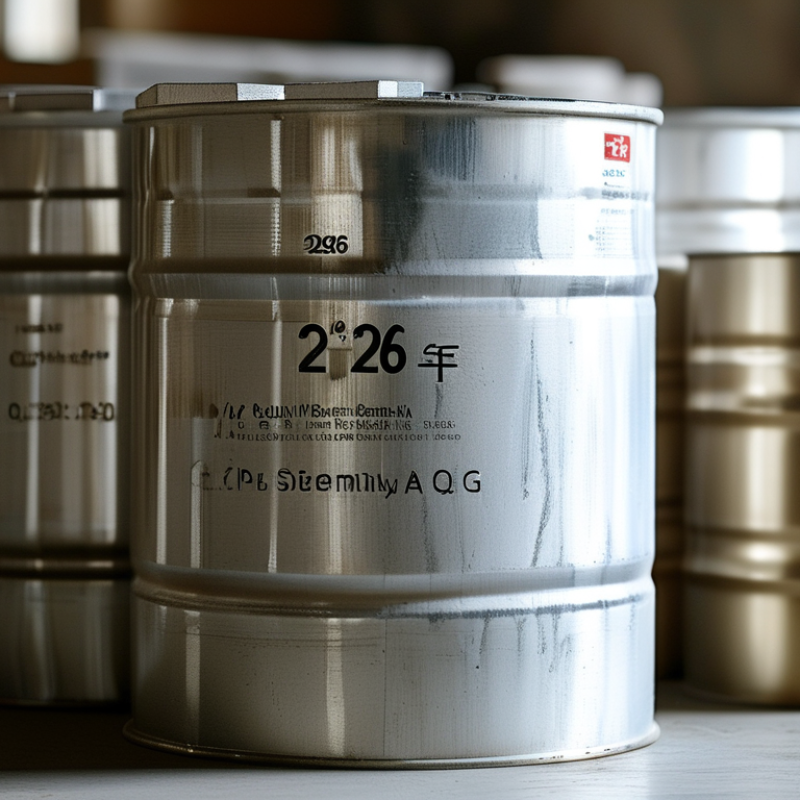
This guide examines the leading wholesale‑calcium‑akg‑bulk‑powder suppliers for 2026. It considers production capacity, minimum order quantities, packaging options, lead times, and export documentation. Practical details matter. A sealed twenty-five-kilogram drum should show the lot code, retest date, net weight, and storage guidance. Ask whether the powder remains stable during humid transport. Some suppliers answer vaguely. That is a warning sign.

The evaluation is not perfect. Supplier data can change, and published specifications may not reveal every manufacturing weakness. Buyers should request fresh samples and compare results with an independent laboratory. Cost still matters, especially for large formulations. Yet dependable quality usually protects margins better than the cheapest offer. Careful verification remains essential before signing a 2026 supply agreement.

2026 Best Wholesale Calcium AKG Bulk Powder Suppliers?

What Is Calcium AKG and Why Buy It in Bulk?

Calcium AKG, or calcium alpha-ketoglutarate, is a mineral salt formed from calcium and alpha-ketoglutaric acid. AKG naturally participates in cellular energy metabolism, while calcium provides a familiar mineral source. In supplements, it usually appears as a fine white powder with a mild taste. Its appearance is not enough to confirm quality. Identity testing matters.

Buying Calcium AKG in bulk can support stable production, consistent formulas, and better purchasing efficiency. It may also reduce packaging waste and help manufacturers maintain inventory. However, bulk pricing should not replace quality review. Request a current certificate of analysis, batch number, assay results, moisture data, heavy-metal testing, and microbiological results. Check whether the powder meets your intended food or supplement regulations. Specifications can vary more than expected.

Tips: Store the powder in a sealed, dry container away from heat and direct light. Confirm particle size before production. Ask about lot-to-lot consistency. A low price can hide weak documentation. I have seen teams focus on cost first, then discover that a minor flow issue slows filling lines. That mistake is avoidable. Choose suppliers with traceable records, responsive technical support, and clear production controls. Supplier audits are useful, but they are not perfect. Independent verification may still be necessary.

Key Factors for Choosing a Wholesale Calcium AKG Supplier

2026 Best Wholesale Calcium AKG Bulk Powder Suppliers?

Key Factors for Choosing a Wholesale Calcium AKG Supplier

A reliable wholesale calcium AKG supplier should provide clear specifications before discussing price. Check the calcium AKG form, assay range, particle size, and recommended storage conditions. Ask for evidence. A current certificate of analysis should match the batch number on the packaging. It should also report identity, purity, heavy metals, microbial limits, and moisture. Generic test sheets create uncertainty.

Supplier experience matters when purchasing bulk powder for supplements or research applications. Ask about manufacturing controls, facility certifications, production capacity, and batch traceability. Certifications should be independently verifiable, not simply displayed in a sales presentation. Request a recent sample and compare its appearance, odor, flow, and laboratory results with the specification. Details matter.

Commercial terms deserve the same attention as technical quality. Review minimum order quantities, lead times, packaging liners, pallet protection, and temperature exposure during transport. A low quotation can look attractive. It may exclude testing, documentation, or secure export packaging. Confirm payment terms and replacement procedures for nonconforming material. I would not rely on verbal promises alone. Some buyers focus heavily on assay results and overlook dissolving behavior during formulation. That is an imperfect approach, because production performance may depend on more than numerical purity. Ask practical questions before committing to a large shipment.

How to Evaluate Calcium AKG Powder Quality and Purity

In bulk calcium AKG powder, quality starts with identity, not appearance. A white, free-flowing powder may still contain the wrong salt form. Ask for HPLC or LC-MS identification, calcium measurement by ICP-OES, and a batch-specific certificate of analysis. USP General Chapter <621> provides useful chromatographic expectations, although calcium AKG may not have a dedicated monograph. That limitation matters.

Purity testing should cover assay, moisture, heavy metals, residual solvents, microbial counts, and unexpected impurities. ISO/IEC 17025:2017 accreditation shows that a laboratory follows recognized competence requirements. It does not automatically prove every result is correct. Request the laboratory name, test dates, methods, detection limits, and raw chromatograms. Grand View Research estimated the global dietary supplements market at approximately 177 billion US dollars in 2023, with continued growth projected through 2030. Larger demand can also encourage weaker documentation. I would not trust a perfect-looking COA without traceable evidence.

Tips: Compare three recent lots, not one. Check whether calcium and AKG values match the declared ratio. Review moisture results because storage humidity can affect flow and stability. Ask for packaging details, including food-grade liners, desiccant use, seal integrity, and recommended temperature. Supplier audits should include sampling records and deviation handling. A small inconsistency is not always failure, but unexplained inconsistency deserves investigation. My practical mistake was once focusing on assay alone; microbiology and stability data often reveal more about real-world quality.

Calcium AKG Manufacturing, Packaging, and Storage Standards

2026 Best Wholesale Calcium AKG Bulk Powder Suppliers?

Reliable Calcium AKG suppliers should show control from raw material intake to final release. Manufacturing areas need documented cleaning, calibrated equipment, and controlled humidity. Each batch should carry a traceable number. The production record should link testing results with operators, dates, and equipment.

Quality checks commonly include identity, assay, moisture, particle size, microbial limits, and heavy metal screening. A current certificate of analysis matters, but it should match the shipped batch. A polished certificate is not enough. Buyers should request representative samples and review stability data. Some suppliers provide strong documents yet explain storage poorly. That gap deserves attention.

Packaging should use sealed food-grade inner liners inside durable drums or bags. Tamper evidence helps protect bulk material during transport. Labels should state batch number, net weight, production date, retest date, and storage conditions. Store Calcium AKG powder in a cool, dry, dark warehouse. Keep containers closed and raised from the floor. Avoid heat, direct sunlight, and repeated opening. Humidity control is often overlooked.

Tips: Ask for packaging photos, recent test records, and a shipment sample. Confirm whether the supplier can support your planned volume. Check how damaged containers are handled. Small details reveal operational discipline. Supplier communication may still be imperfect, so record every specification before purchase.

2026 Best Wholesale Calcium AKG Bulk Powder Suppliers? - Calcium AKG Manufacturing, Packaging, and Storage Standards

Evaluation Dimension Wholesale Requirement or Benchmark Recommended Verification Method Supplier Documentation
Product identity Calcium alpha-ketoglutarate, also known as calcium 2-oxoglutarate; the exact salt form and hydrate status must be stated. Compare the specification, product label, certificate of analysis, and an independent laboratory identity result. Technical data sheet, certificate of analysis, product specification, and safety data sheet.
Assay and purity Use a contract-specific assay limit. A common commercial purchasing target is not less than 98% assay, but the analytical method and reporting basis must be defined. Validated HPLC or another suitable validated quantitative method, with reference standards and system-suitability records. Batch-specific assay result, test method, chromatogram when required, and laboratory approval status.
Calcium content Set a defined calcium range based on the declared chemical form and stoichiometry; do not compare results from anhydrous and hydrated materials without adjustment. ICP-OES, ICP-MS, or another validated elemental-analysis method. Elemental assay report and calculation basis, including dry basis or as-is basis.
Appearance and physical form Uniform white to off-white powder, free-flowing or conforming to the agreed granulation; no visible foreign matter, abnormal odor, or excessive caking. Visual inspection under controlled lighting and comparison with an approved reference sample. Appearance specification, approved sample record, and deviation report if applicable.
Particle-size profile Define the required mesh or particle-size distribution according to blending, capsule filling, tablet compression, or beverage use. No universal particle-size limit applies to every application. Laser diffraction or sieve analysis using a documented sample-preparation procedure. Particle-size specification, test result, and sampling plan.
Moisture and loss on drying Establish a moisture limit suitable for flowability and stability; many buyers specify a low-single-digit percentage, subject to product validation. Karl Fischer titration for water or a validated loss-on-drying method, with the method clearly identified. Moisture result, method, equipment calibration record, and trend data where available.
Microbiological quality Specify total aerobic microbial count, total yeast and mold count, and absence or limits for relevant pathogens according to the intended market and product category. Testing by recognized compendial or validated microbiological methods in a qualified laboratory. Microbiology certificate, method references, laboratory qualification, and environmental-monitoring summary when applicable.
Heavy metals and elemental impurities Control lead, arsenic, cadmium, and mercury according to applicable food, dietary-supplement, or pharmaceutical requirements in the destination market. ICP-MS or ICP-OES with appropriate detection limits and contamination controls. Elemental-impurity report, risk assessment for raw materials, and corrective-action records if limits are exceeded.
Residual solvents and process impurities Residual-solvent limits must reflect the solvents used and the regulatory requirements of the intended application; products should not be declared solvent-free without supporting evidence. Headspace GC or another validated method, supported by a process-based risk assessment. Residual-solvent statement, process-risk assessment, and batch test results when required.
Manufacturing controls Controlled weighing, reaction, drying, milling, sieving, blending, and metal-detection steps should be defined and operated under documented procedures. Quality-system audit, batch-record review, equipment-calibration review, and change-control assessment. Manufacturing flow chart, master batch record, SOP index, calibration records, and deviation/CAPA procedures.
Quality-system certification Prefer facilities operating under applicable GMP principles and a certified food-safety system such as HACCP-based controls or ISO 22000, depending on the product category. Confirm certificate scope, issuing body, validity dates, site address, and audit status. Current certificates, audit summaries, inspection responses, and supplier-qualification questionnaire.
Primary packaging Use clean, food-contact-compatible packaging selected for moisture protection, seal integrity, and compatibility with the powder. Review packaging specifications, food-contact declarations, seal checks, and container-closure integrity controls. Packaging material specification, certificate of conformity, liner details, and packaging-line inspection records.
Bulk pack formats Common wholesale formats include sealed bags inside fiber, HDPE, or comparable rigid drums; exact net weight should be agreed according to handling and transport requirements. Verify net weight, tare weight, liner count, tamper evidence, pallet configuration, and shipping marks. Packing list, package specification, palletization diagram, and lot-traceability record.
Label and traceability Each package should show product name, lot or batch number, net quantity, manufacturing date, retest or expiry date where applicable, storage conditions, and handling information. Match the label against the certificate of analysis, batch record, purchase order, and shipping documents. Approved artwork, label-control procedure, traceability test, and recall procedure.
Storage conditions Store tightly sealed in a cool, dry, clean, well-ventilated area, protected from direct sunlight, heat, moisture, and incompatible materials. Follow the validated product specification. Review warehouse temperature and humidity logs, stock-rotation controls, pest-control records, and quarantine procedures. Storage instruction, stability protocol, warehouse-monitoring records, and transport-condition requirements.
Shelf life and stability Shelf life must be supported by real-time or accelerated stability data in the proposed packaging. Do not accept a fixed shelf-life claim without documented validation. Review stability-indicating tests for assay, moisture, appearance, microbial quality, and physical performance. Stability summary, approved shelf life, retest policy, and ongoing-stability plan.
Sampling and release The lot should remain under quarantine until quality-control review confirms conformity with the agreed specification. Check written sampling plans, representative sampling practices, retained samples, and quality-release signatures. Sampling SOP, batch-release record, retained-sample log, and certificate of analysis.
Transport and delivery Use clean, dry, enclosed transport that protects the sealed powder from rain, condensation, excessive heat, contamination, and package damage. Inspect shipping containers, moisture barriers, pallet wrapping, temperature exposure, and delivery-condition records. Shipping specification, packing list, transport record, and damage or excursion report.
Commercial comparison Compare total landed cost, minimum order quantity, lead time, batch consistency, documentation quality, packaging options, and payment terms—not price alone. Use a weighted supplier scorecard and approve samples before placing a recurring bulk order. Quotation, sample-evaluation report, supply agreement, quality agreement, and agreed change-notification terms.

Note: Specification limits should be finalized according to the intended use, destination-market regulations, validated analytical methods, and the purchasing quality agreement.

How to Compare Prices, Certifications, and Supplier Reliability

When comparing wholesale calcium AKG bulk powder suppliers, price should not lead the decision. The 2024 Grand View Research report valued the global dietary supplements market at about USD 177.5 billion in 2023. That scale increases pressure on ingredient buyers. Request a landed-cost quote, including freight, testing, customs, packaging, and possible storage fees. A cheaper kilogram can become expensive after failed testing or delayed delivery.

Certification needs careful checking. Look for current GMP, ISO 9001, HACCP, and independent laboratory testing. Certification logos alone prove little. Ask for the certificate number, scope, issuing body, and expiration date. Each batch should include a traceable certificate of analysis. It should show identity, assay, moisture, microbial limits, heavy metals, and residual solvents. The 2024 Council for Responsible Nutrition survey reported that 75% of U.S. adults use dietary supplements. That level of use makes documentation more than paperwork. It supports safer purchasing decisions.

Supplier reliability appears in small details. Request three recent batch records, not only one polished sample. Compare assay variation, lead times, packaging seals, and complaint response times. Ask whether the supplier can reserve the same specification for six months. A video audit can reveal dusty storage areas or unclear labeling. I have seen buyers focus too heavily on price. That is a mistake, sometimes. Still, certifications do not guarantee perfect performance. Retain a pre-shipment sample, define acceptance limits, and review the contract before payment. Industry reports provide useful direction, but your own verification remains essential.

2026 Best Wholesale Calcium AKG Bulk Powder Suppliers?

How to Compare Prices, Certifications, and Supplier Reliability

This neutral buyer evaluation model assigns the greatest weight to landed cost, followed by certification and independent testing evidence. Before placing a wholesale order, verify the current quotation, MOQ, certificate of analysis, identity and purity testing, heavy-metal and microbiological results, production lead time, batch traceability, and shipping documentation.

Request Your FREE Quote